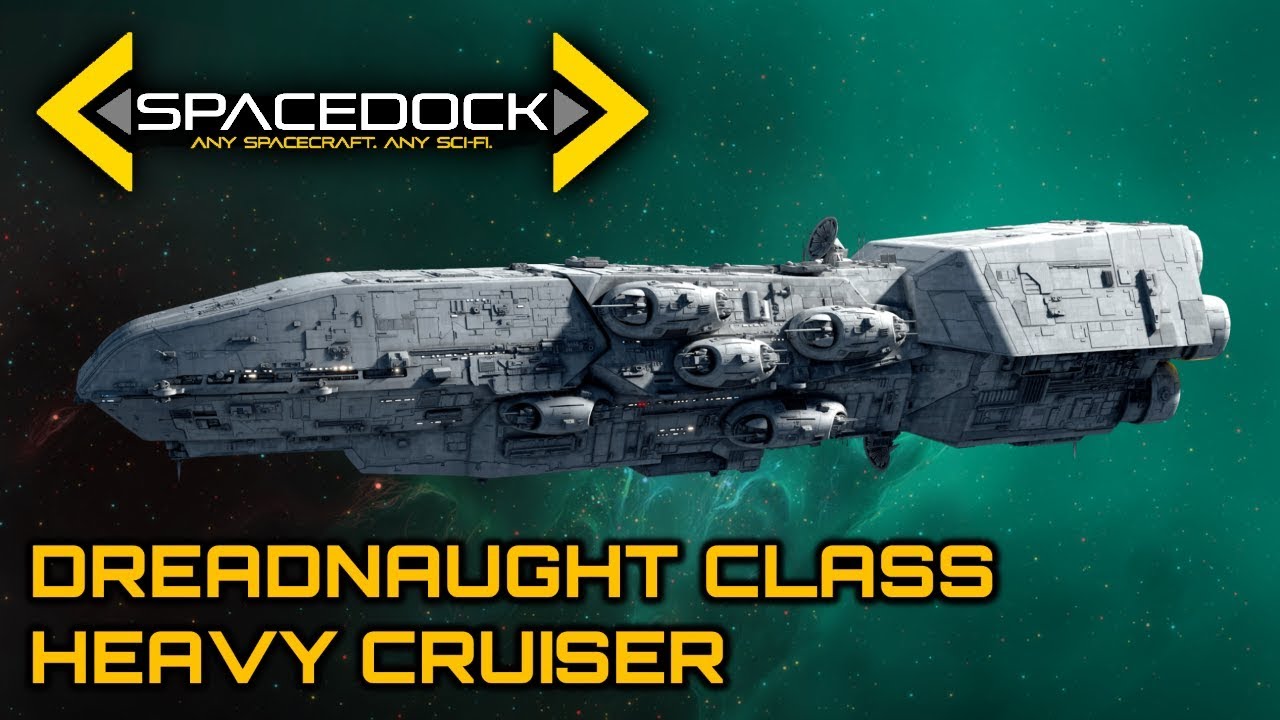
Imperial Battleships

The type of ship called "Destroyer" derived its name from "torpedo boat destroyer" anyway.

Make a specialist space station killing ship (they don't move so fast), call it a Base Destroyer. Within a generation they'll just be known as Destroyers.

And mostly this has been a rambling discussion, not really any argument.
 
The antitorpedo boat origin of this type of ship is retained in its name in other languages, including French (contre-torpilleur), Italian (cacciatorpediniere), Portuguese (contratorpedeiro), Czech (torpédoborec), Greek (antitorpiliko, αντιτορπιλικό), Dutch (torpedobootjager) and, up until the Second World War, Polish (kontrtorpedowiec, now obsolete).[6]

Son nom est la reprise de son équivalent anglais destroyer (« destructeur »), abréviation de torpedo boat destroyer (« destructeur de torpilleurs »).


Also counter, anti, and hunter.
 
Except that we don't do that even now.

The USN at one point just renamed a bunch of guided missile frigates as guided missile cruisers, primarily because of congressional whining about the Russians having more cruisers than the US did. But also because the words don't have any intrinsic meaning.

Currently, USN calls things cruisers if they are primarily area defence & command platforms, while they are destroyers if they are more multi role and don't have flagship type capabilities. While the main difference between destroyers and frigates is currently that destroyers are more focused on being in a fleet or carrier group, while frigates are more likely to be independently patrolling or escorting non combat ships. More or less. Depending on what year you ask.

Other nations have more strict classification differences.
Aye, politics has a way of sometimes intruding upon things. As the Alaska class shows, even services sometimes let their biases interfere with things.

Generally speaking, frigates have been smaller than destroyers even if they had the same basic setup. The OHP class the USN got rid of was a great all-around workhorse platform that could do escort, anti-air, anti-sub missions. I guess it wasn't sexy enough for the USN leadership as they retired the class and we got the LCS to replace it. And the Constellation seems to be headed out the door before it's even getting a debut.

To the HH universe comment, that's a valid point as well. That seemed to be a more linear progression though that had more to do with the technology than anything else. All the classes were suffering from displacement inflation as weapon systems got bigger. We've seen a parallel in that in the USN as well - look at the WW2 era ships where Destroyers were around 2,500 tons, and today the Arleigh Burke is about 10k tons.

Renegade Legion Leviathan ships reversed the size/displacement label as well, with frigates being larger than destroyers. When I first played the game that struck me as very odd because it wasn't what I was expecting. Frigates should be smaller than destroyers because that's how things were - except they weren't for the game setting. By seeing that as wrong is kind of the point I was making - sure you can label anything however you wish (especially something based on fantasy). Though if you are using terminology that already has meaning, don't be surprised when it's questioned.

As to Star Destroyers... we aren't talking about the local bulk cruisers are we? That fine ship he was showing is one of those big Corellian cruisers!
 
The antitorpedo boat origin of this type of ship is retained in its name in other languages, including French (contre-torpilleur), Italian (cacciatorpediniere), Portuguese (contratorpedeiro), Czech (torpédoborec), Greek (antitorpiliko, αντιτορπιλικό), Dutch (torpedobootjager) and, up until the Second World War, Polish (kontrtorpedowiec, now obsolete).[6]

Son nom est la reprise de son équivalent anglais destroyer (« destructeur »), abréviation de torpedo boat destroyer (« destructeur de torpilleurs »).


Also counter, anti, and hunter.
Palidan

Anti-Palidan
 
maxresdefault.jpg
 
Those ship classifications were generally assigned by role and that role tended to result in certain designs parameters. Size is a function of role, which is why ships you expect to be smaller than other ships might not be. Size is not part of the definition.

Those design parameters may be radically different for the role in the future. Frigates, as ships designed to operate independently or to escort non combatants, may or may not remain smaller than destroyers, which are primarily considered fleet escorts.

On the other hand, the distinction between anti-sub, anti-air, and anti-anti ship in terms of roles largely ceases to exist. In the Traveller rules, things like Battlecruisers don't have a function, because their role is to heavily armed like a BB but fast enough to catch and destroy cruisers. But that's just a battleship, because there's no reason a regular BB isn't as fast as a cruiser already.

The reality is sticking with traditional wet navy ship classifications probably causes more confusion that clarity. Both because their definitions IRL are fuzzy and because those definitions don't fit the fictional reality of a space navy.
 
Generally speaking, frigates have been smaller than destroyers even if they had the same basic setup. The OHP class the USN got rid of was a great all-around workhorse platform that could do escort, anti-air, anti-sub missions. I guess it wasn't sexy enough for the USN leadership as they retired the class and we got the LCS to replace it. And the Constellation seems to be headed out the door before it's even getting a debut.

. . .

Renegade Legion Leviathan ships reversed the size/displacement label as well, with frigates being larger than destroyers. When I first played the game that struck me as very odd because it wasn't what I was expecting. Frigates should be smaller than destroyers because that's how things were - except they weren't for the game setting. By seeing that as wrong is kind of the point I was making - sure you can label anything however you wish (especially something based on fantasy). Though if you are using terminology that already has meaning, don't be surprised when it's questioned.

That is because Renegade Legion (and many older US- based productions) were drawing upon recent USN historical precedent of the time and our "oddities" in terminology over here across the pond that have since been brought into line with the terminology more commonly used worldwide.

Post WW2, the USN had Destroyers (DD) and also "Destroyer Leaders" (DL) that led Destroyer Flotillas as squadron command ships. They also had Destroyer Escorts (DE) left over from WW2 that performed the same role as Destroyers, but for Commercial Convoy Escort duty rather than Fleet Escort (and thus did not need to meet fleet mobility standards, and were cheaper to build - the equivalent of the European "Frigate" or "Corvette/Sloop-of-War", depending upon size), and also "Escort Destroyers" (DDE) which nominally filled the role of Destroyer Escorts, but were larger and had Fleet mobility capability and thus could be pressed into service as Fleet Escorts at need as a "Light Destroyer". They also had some big Heavy Cruisers (CA) left over from WW2 which were generally known as "Gun Cruisers".

By the late 1960's/early 1970s, they had also introduced a new class called a "Patrol Frigate" (PF) similar to an Ocean Escort, but smaller.

So what does that have to do with anything? By the late 50s/early 60s, USN terminology generally referred to vessels by the following terminology:
  • Battleship (BB) - (decommissioned)
  • Gun Cruiser (CA) = ("Heavy Cruiser")
  • Frigate (DL) = ("Destroyer Leader", or other nations' "Cruisers")
  • Destroyer (DD) = ("Destroyer")
  • Ocean/Destoyer Escort (DE) = ("Destroyer Escort", or other nations' "Frigates")
  • Patrol Frigate (PF) = (other nations' "Frigates" or "Corvettes/Sloops-of-War" )
Note that the USN "Frigate" was bigger than the Destroyer and was comparable to other navies' Cruisers. And the USN "Gun Cruiser" was much bigger than the rest of the world's Cruisers. And USN "Escorts" and "Patrol Frigates" compared to other navies' Frigates and Corvettes.

By the late 1960s/Early 1970s there was what was perceived as a "Cruiser Gap" (purely perception and political, not reality in terms of actual capabilities), due to the naming convention, because the USN only had a few "Gun Cruisers" left and still in service, and quite a few "Frigates" along with destroyers and a number of "Escorts". The Soviet Union by comparison had a number of "Cruisers" in service. The feeling was that other nations would perceive the USN as under-equipped and under-gunned due to the difference in naming (we actually had a large number of Frigates, which were Cruiser-equivalents). So in 1975, Ocean Escorts (DE) and Patrol Frigates (PF) were discontinued and rolled into the new class of "Frigate" (FF), a small vessel, and the new and older Destroyers (DD) and Destroyer-Leader "Frigates" (DL) were reclassified as either Destroyers (DD) or "Cruisers" (C_ ) based on size and capability. Most of the new builds were Guided Missile equipped (CG, DDG, FFG, etc), and some were nuclear propulsion (CGN, DDGN, etc).

That is why Renegade Legion classified their vessels the way they did. (And the reason why the Star Trek "Star Fleet Technical Manual" of the era classed the Federation Vessels as:
  • Dreadnought (prototype) - (Mk X) (= Battleship)
  • Heavy Cruiser - (Mk IX) (= Gun Cruiser)
  • (Cruiser / Frigate) (?)
  • Destroyer - (Mk VIII) (= Destroyer)
  • Scout - (Mk VII) (= Destroyer/Ocean Escort / Patrol Frigate / Sloop-of-War)
  • Transport/Tug - (Mk VI) (= Armed Escort)

 
Those ship classifications were generally assigned by role and that role tended to result in certain designs parameters. Size is a function of role, which is why ships you expect to be smaller than other ships might not be. Size is not part of the definition.

Those design parameters may be radically different for the role in the future. Frigates, as ships designed to operate independently or to escort non combatants, may or may not remain smaller than destroyers, which are primarily considered fleet escorts.

On the other hand, the distinction between anti-sub, anti-air, and anti-anti ship in terms of roles largely ceases to exist. In the Traveller rules, things like Battlecruisers don't have a function, because their role is to heavily armed like a BB but fast enough to catch and destroy cruisers. But that's just a battleship, because there's no reason a regular BB isn't as fast as a cruiser already.

The reality is sticking with traditional wet navy ship classifications probably causes more confusion that clarity. Both because their definitions IRL are fuzzy and because those definitions don't fit the fictional reality of a space navy.
Size CAN BE a function of role, but there are often other considerations at play that dictate such things. Historically things like sizes of building slips available has limited the size of a ship being built. For a period the USN warship size was dictated by the size restrictions of the Panama Canal. One of the biggest (and probably longest running) dictum on size is money and/or resources. Even the USN during it's peak WW2 building years had to live within certain limitations. The DE class was created with smaller engines and hull sizes because it was both cheaper to build and because it's role as an escort of merchant convoys meant it didn't require the same things that say a normal fleet escort may require.

I agree that the future, especially once we begin developing spacecraft for violent purposes, may stand our existing terminology on end. But that brings us right back around to using terms we have today to communicate things to the people of today - even if we are talking many tomorrow's in the future.

Ships today are often finding themselves built with multi-role capabilities, but I think that's being driven more by budgetary constraints than anything else. Most nations can't afford to build ships these days that aren't multirole because they don't have the funding luxury to do so. It's not really because, as an example, the USN wanting to build Tico-class cruisers as escorts for it's carrier battle groups. Finding a carrier "battle group" that has like more than 3-5 ships in it is a rare sight these days in the USN. In theory you'd expect the carrier, a pair of cruisers for air defense a pair of tin cans for air/sub defense, and 1-2 dedicated destroyers/frigates for anti-sub work. Plus the support ships and a submarine somewhere. Ships today are more powerful individually, though a single hull can only be in a single place, so quantity can be as important as quality.

The battlecruiser concept remains ok on paper, but times have changed somewhat, and the big-gunned versions weren't really around long enough before aircraft made large surface combatants somewhat obsolete. On paper their mission was one thing, in reality (during their heyday at least) their deployment and usage varied greatly. Historically battlecruiser designs generally went one of two ways - either you took a battleship and stripped out a lot of armor or else you took a heavy cruiser and up-armored/gunned it.

The Brits built the Courageous class, and also the Hood - built like 12 years apart, but also built to very different standards while staying within the same label 'battle cruiser'. The Brits seemed to favor the idea of stripping down a battleship. The USN though took the opposite view and made the Alask class by making it more of a bigger Baltimore class cruiser rather than a smaller Iows (even though it was basically the same thing) Fast forward to the 80s and we see the Soviet Union building the Kirov class battlecruiser - even though at the time that label was applied by the West and the Soviets just called them cruisers (that were as big as many WW2 battleship classes).

I can't say that I can do much with oar-powered or sail-powered ship classifications. Often their type classification was based upon sail layout, or even their oar bank distribution. I'm more familiar with coal/oil fired ship classes and designations. So that's what I use as my own bellweather for ship nomenclatures, hence the way I have framed my contributions. These things are always a-changing, but I still feel most comfortable falling back on the era of the big gun ships in the worlds navies.
 
That is because Renegade Legion (and many older US- based productions) were drawing upon recent USN historical precedent of the time and our "oddities" in terminology over here across the pond that have since been brought into line with the terminology more commonly used worldwide.

Post WW2, the USN had Destroyers (DD) and also "Destroyer Leaders" (DL) that led Destroyer Flotillas as squadron command ships. They also had Destroyer Escorts (DE) left over from WW2 that performed the same role as Destroyers, but for Commercial Convoy Escort duty rather than Fleet Escort (and thus did not need to meet fleet mobility standards, and were cheaper to build - the equivalent of the European "Frigate" or "Corvette/Sloop-of-War", depending upon size), and also "Escort Destroyers" (DDE) which nominally filled the role of Destroyer Escorts, but were larger and had Fleet mobility capability and thus could be pressed into service as Fleet Escorts at need as a "Light Destroyer". They also had some big Heavy Cruisers (CA) left over from WW2 which were generally known as "Gun Cruisers".

By the late 1960's/early 1970s, they had also introduced a new class called a "Patrol Frigate" (PF) similar to an Ocean Escort, but smaller.

So what does that have to do with anything? By the late 50s/early 60s, USN terminology generally referred to vessels by the following terminology:
  • Battleship (BB) - (decommissioned)
  • Gun Cruiser (CA) = ("Heavy Cruiser")
  • Frigate (DL) = ("Destroyer Leader", or other nations' "Cruisers")
  • Destroyer (DD) = ("Destroyer")
  • Ocean/Destoyer Escort (DE) = ("Destroyer Escort", or other nations' "Frigates")
  • Patrol Frigate (PF) = (other nations' "Frigates" or "Corvettes/Sloops-of-War" )
Note that the USN "Frigate" was bigger than the Destroyer and was comparable to other navies' Cruisers. And the USN "Gun Cruiser" was much bigger than the rest of the world's Cruisers. And USN "Escorts" and "Patrol Frigates" compared to other navies' Frigates and Corvettes.

By the late 1960s/Early 1970s there was what was perceived as a "Cruiser Gap" (purely perception and political, not reality in terms of actual capabilities), due to the naming convention, because the USN only had a few "Gun Cruisers" left and still in service, and quite a few "Frigates" along with destroyers and a number of "Escorts". The Soviet Union by comparison had a number of "Cruisers" in service. The feeling was that other nations would perceive the USN as under-equipped and under-gunned due to the difference in naming (we actually had a large number of Frigates, which were Cruiser-equivalents). So in 1975, Ocean Escorts (DE) and Patrol Frigates (PF) were discontinued and rolled into the new class of "Frigate" (FF), a small vessel, and the new and older Destroyers (DD) and Destroyer-Leader "Frigates" (DL) were reclassified as either Destroyers (DD) or "Cruisers" (C_ ) based on size and capability. Most of the new builds were Guided Missile equipped (CG, DDG, FFG, etc), and some were nuclear propulsion (CGN, DDGN, etc).

That is why Renegade Legion classified their vessels the way they did. (And the reason why the Star Trek "Star Fleet Technical Manual" of the era classed the Federation Vessels as:
  • Dreadnought (prototype) - (Mk X) (= Battleship)
  • Heavy Cruiser - (Mk IX) (= Gun Cruiser)
  • (Cruiser / Frigate) (?)
  • Destroyer - (Mk VIII) (= Destroyer)
  • Scout - (Mk VII) (= Destroyer/Ocean Escort / Patrol Frigate / Sloop-of-War)
  • Transport/Tug - (Mk VI) (= Armed Escort)
Yeah, we started seeing the displacement inflation during the war as technology, need and other things shaped the designs and sizes of ships. Look at how the typical destroyer changed from 1939 to 1945. The Sims class was a nicely designed destroyer for it's time - 5in guns in 5x1 configuration and around 1,500 tons. By the end of the war the Gearing class, at 2,500 tons, had the standard 5in guns in 6x1 configuration and a much heavier secondary armament layout. One class was built to treaty standards and the other built with lessons learned during the war.

Within a decade or so these ships started getting retired and newer, bigger, and built to the current 'modern' needs of the navy were coming down the slipways. There was no need for the ships designed for the war, and financial constraints forced certain decsions (as well as the political ones you mentioned). That trend was continued for a while.

I never was into the Star Trek side, but did play a lot of Star Fleet battles. There you did see the WW1/WW2 ship nomenclature applied to the different races. I think mostly for the coolness factor in using some of the terminology. There they still reserved the Dreadnaught class to being bigger than the battleship class. Their frigates maintained the smaller than destroyers idea. And they added in some variations, too, like the Tholian's being physically limited in the size of hull they could build (at least for a time), so they simply welded the one kind together. They Lyran race did something similar with their catamaran-style ships.

Interesting discussion all!
 
Dreadnought armoured cruisers, were conceptualized as a solution to a particular problem, and once that was resolved, tasked to roles that would take advantage of their capabilities.

The Alaskas were what I would have termed supercruisers, though on the large side, meant to hunt down their supposed Japanese counterparts.
 
He also thought parsecs were a unit of time until a massive fix tried to make that make sense, so take the naming conventions he used with a shaker of salt. ;)
Uh.. I don't think so.
He made the Kessel run in ten parsecs.
The Kessel run goes through The Maw. An area full of black holes.
Han cut through The Maw by the distance of 10 Parsecs. So he scraped by a few black holes to shorten the distance to a record 10 parsecs.

Han was correct. Your astrography is wrong.
(My interpretation)
 
Uh.. I don't think so.
He made the Kessel run in ten parsecs.
The Kessel run goes through The Maw. An area full of black holes.
Han cut through The Maw by the distance of 10 Parsecs. So he scraped by a few black holes to shorten the distance to a record 10 parsecs.

Han was correct. Your astrography is wrong.
(My interpretation)
Feel free to hold your view, but it was a ham-handed fix to a writing blunder.
 
Uh.. I don't think so.
He made the Kessel run in ten parsecs.
The Kessel run goes through The Maw. An area full of black holes.
Han cut through The Maw by the distance of 10 Parsecs. So he scraped by a few black holes to shorten the distance to a record 10 parsecs.

Han was correct. Your astrography is wrong.
(My interpretation)
George was incorrect. After a hefty bit of being clowned on it by fans (many of whom were science literate, or scientists), the EU and then later the Han movie retconned it.
He totally thought it was a unit of time in the 70's. And Harrison Ford had no clue at all until someone filled him in.
 
Uh.. I don't think so.
He made the Kessel run in ten parsecs.
The Kessel run goes through The Maw. An area full of black holes.
Han cut through The Maw by the distance of 10 Parsecs. So he scraped by a few black holes to shorten the distance to a record 10 parsecs.

Han was correct. Your astrography is wrong.
(My interpretation)
utter handwavium technobabble - parsecs are a measure of distance. Han is using it as a measure of time

A better explanation rather than the preposterous and scientifically wrong one is that Han deliberately said parsec to see if the noobs knew anything...

the real reason is Lucas got it wrong.

And Han shot first.
 
Back
Top