
Towed Arrays for starships.

wbnc

Cosmic Mongoose
Working on sme visual aides,and tech for a setting i have. It uses Mongoose rules so I was wanting some feedback.

I'll post what I have and hopefully some folks can chime in a help catch anything obvious i have missed.
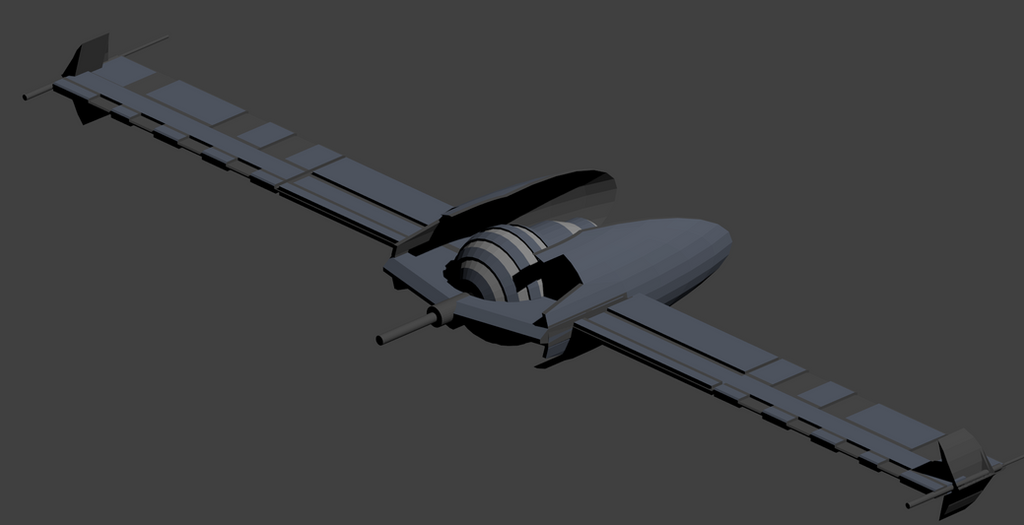
towed_sensor_array_by_wbyrd-d9pans4.png


To supplement their hull mounted sensors, and allow for various systems to operate away from electromagnetic noise caused by ships drives and other systems a towed array is extended on a log cable to varying distances from the ships hull.

The array carries it's own power supply, control systems, and sensor packages which are linked into the ships central processing core where data is collated, filtered ad relayed to the sensor operators.This allows data from multiple locations to be seamlessly formed into a single image of the local region of space, and greatly increase the effective size of the ships sensor net.

while the cable system does pose problems it allows the package to remain fairly compact with a minimal sensor profile of it's own. more advanced system allow for self propelled, and self guided min drones to trail the ship, and move to positions flanking the vessel. but these systems require a more complex control system, and drones which can keep up with the vessel as it maneuvers. the increase in investment of resources, and money that independent sensor drones require is the primary reason they have not fully replaced towed arrays in many fleets, and civilian combat craft.

antenna and optics are mounted in the main body, as well as the extended wings of the drone. with highly directional EM sensors positioned int he probes at the outer tips of the wings. The curved shields around the main body also mount various phased antenna systems but primarily shield the wings from electromagnetic noise from the ships small power plant.

In addition some towed arrays will trail a long antenna wire along the tow cable to allow the tow cable itself to act as a wide area radio interferometer, when deployed with multiple drones which form a large area virtual antenna.

Towed ECM array. An alternate to the towed sensor array is a towed array equipped with powerful jamming, and electronic countermeasures systems. These arrays can act like an escorting drone by generating false sensor images, and distorting the electromagnetic, and thermal profile of the ship towing it. this causes missiles to target the drone itself, or home in on the center of the profile, which has been distorted to the point that it's center is outside the actual mass of the ship using the array.

for ease of storage the wings of the array will rotated and fold backwards allowing the drone to be stored in a much smaller container, or recess in the ships hull.and in all cases a towed array will require that a ship be fitted with a light duty tow cable, or manipulator arms( not included with array) to deploy the drone without damage to the drone.

NOTES: used as a visual aid for game campaign. to illustrate one possible means of creating an extended sensor net for scouts, escorts, and other warships.

Mongoose Traveller systems that might include Towed arrays:
Sensor Extension network
Dispersed arrays
Military Electronic Countermeasures package

Potential Stats for independent towed sensor packages

Military grade towed array
Hull 8 ton non gravity hull. dispersed structure decreased structure due to low cost construction.
Power system TL12 fusion reactor, 1 ton, with 1 ton fuel 2 tons
Drone control system 1.5 tons
Military Sensor package, with enhanced signal processing. 4 tons
tow Cable: attaches to mother ship, in reverse of normal system .08 tons

Military grade towed ECM System
Hull 8 ton non gravity hull. dispersed structure decreased structure due to low cost construction.
Power system TL12 fusion reactor, 1 ton, with 1 ton fuel 2 tons
Drone control system 1.5 tons
Military Sensor package, Countermeasures Suite 4 tons
tow Cable: attaches to mother ship, in reverse of normal system .08 tons

Self propelled drone system
Hull 8 ton non gravity hull. dispersed structure decreased structure due to low cost construction.
Thrust: 1
Power system TL12 fusion reactor, 1 ton, with 1 ton fuel 2 tons
Drone control system 1.5 tons
Military Sensor package, with enhanced signal processing. 4 tons
Gravitic Drive: 0.08 tons

Potential uses, when deployed the drone can execute a close escort order which allows it to intercept and execute EW against incoming missiles. however it is likely the drone will be destroyed by decoyed missiles.
 
Wouldn't the array itself be a drone? Towing something at the end of a cable is a bad idea when it comes to Newtonian movement in space. Remember that the towed array is going to continue in the original direction it started while the towing ship makes a maneuver. Towed arrays work in a fluidic environment... but not so much in space.

If you need to get away from EM interference you could launch your array in a drone, and it could use batteries for power, or even a standard powerplant that is offline when it needs to be 'silent' interference wise. Actually batteries or even a fuel cell would be sufficient for short-term work. And would provide a lot less hassle than towing your array.
 
phavoc said:
Wouldn't the array itself be a drone? Towing something at the end of a cable is a bad idea when it comes to Newtonian movement in space. Remember that the towed array is going to continue in the original direction it started while the towing ship makes a maneuver. Towed arrays work in a fluidic environment... but not so much in space.
Two ways I saw them being used. as part of the existing extended array, or as a way to explain how an extension network would work.if they were art of that system they would be powered by the ship, and operated by a sensor operator not the drones onboard systems.

OR, the independent self contained drone would be different since it has it's own power supply, and control system.

As for the Newtonian physics angle....I thought about that. But I didn't see this as something you would have out when engaged in rapid maneuvers. A ship with a towed array could still use it's drives to maintain acceleration in a straight line. but any rapid maneuvers would risk whip snapping the array off into deep space if it executed a radical maneuver.

do you think simply adjusting the fluff text, would be enough to cover that.Or do you think some sort of restriction on movement, or a penalty on piloting would be needed ( with failure of the pilot check resulting in damage, or loss of the array).Or possibly adding a small drive unit to the array so it can maintain position?


phavoc said:
If you need to get away from EM interference you could launch your array in a drone, and it could use batteries for power, or even a standard power plant that is offline when it needs to be 'silent' interference wise. Actually batteries or even a fuel cell would be sufficient for short-term work. And would provide a lot less hassle than towing your array.

...hmm ya know now that you mention those power sources....I'll tinker and see how much it would change things if I swapped the drones power suppl to a battery or chem cell. to reduce it's own signature/cost.

True, those would be options.
about the only advantage i can see over a full drone is that it would allow you to accelerate, straight line, without a drone having to be designed to match your own thrust rating. if you had to recover the towed array the only thing you have to deal with is the inertia generated by the cable being retracted. A shock absorbing cradle can handle that sort of impact without damaging the ship or the drone. Using the array would let you gain the benefits of running quiet, while cruising.


when i started on the idea, I saw it as part of an extended array, or extension net. since they would work as described by the systems. and would have the same sort of limitations.

the actual self contained towed drone came as an after thought. Basically a way to add enhanced sensors to a ship , with a few built in drawbacks, and side effects.
 
Condottiere said:
I imagine a sort of long lazy cruise while sensor operators are looking for something, the cable and array stealthed.

oh good idea. didn't think about that
 
wbnc said:
Two ways I saw them being used. as part of the existing extended array, or as a way to explain how an extension network would work.if they were art of that system they would be powered by the ship, and operated by a sensor operator not the drones onboard systems.

Nothing stopping that from happening. Actually, as a 'drone', the drone would basically (or could) operate itself. The sensor operator would tell it what he wanted or send it in the direction he wanted and the sensors would do the rest. Operating on batteries or a fuel cell, and being so tiny, it would be extremely hard to pick it up at a distance since it's signature would be so small.

It also offers the sensor guy a way to send in a very expendable piece of hardware where they don't want to risk their own ship.

wbnc said:
As for the Newtonian physics angle....I thought about that. But I didn't see this as something you would have out when engaged in rapid maneuvers. A ship with a towed array could still use it's drives to maintain acceleration in a straight line. but any rapid maneuvers would risk whip snapping the array off into deep space if it executed a radical maneuver.

It still doesn't make a lot of sense. Cables that aren't stiff could still whipsaw the array around if the ship made any sort of minor maneuver. Now you could counter that by making the cable also provide power TO the drone bed, thus you could have electric thrusters making off-setting maneuvers for minor things. You still couldn't do radical maneuvers with the towing ship, as the electric thrusters wouldn't have the power to offset it. But minor things would be fine. You also need to think about pulling it back in. Remember that as you start to pull on the cable it will accelerate that platform and without deceleration it will smash itself to pieces as it comes into the back of the ship.

A sensor-drone craft just makes more sense. I don't think any ship would use a towed array in space. The idea is too navalized to deal with a fluidic environment. Plus there are the other issues related to trying to do that in space.

Condottiere said:
I imagine a sort of long lazy cruise while sensor operators are looking for something, the cable and array stealthed.

The ship doing the towing would be the one spotted. A passive array would be virtually invisible except at very close range. It would have near nil electronic output, almost no heat. With just a very little effort you could make it temperature neutral, thus it would be invisible to virtually all passive sensors.
 
phavoc said:
wbnc said:
Two ways I saw them being used. as part of the existing extended array, or as a way to explain how an extension network would work.if they were art of that system they would be powered by the ship, and operated by a sensor operator not the drones onboard systems.

Nothing stopping that from happening. Actually, as a 'drone', the drone would basically (or could) operate itself. The sensor operator would tell it what he wanted or send it in the direction he wanted and the sensors would do the rest. Operating on batteries or a fuel cell, and being so tiny, it would be extremely hard to pick it up at a distance since it's signature would be so small.

It also offers the sensor guy a way to send in a very expendable piece of hardware where they don't want to risk their own ship.
alright good points. I'll see how small I can shrink the drones. I think with some work it cold be shrunk down to making it fairly small. it's a good bit of mental exercise at this point :)


phavoc said:
It still doesn't make a lot of sense. Cables that aren't stiff could still whipsaw the array around if the ship made any sort of minor maneuver. Now you could counter that by making the cable also provide power TO the drone bed, thus you could have electric thrusters making off-setting maneuvers for minor things. You still couldn't do radical maneuvers with the towing ship, as the electric thrusters wouldn't have the power to offset it. But minor things would be fine. You also need to think about pulling it back in. Remember that as you start to pull on the cable it will accelerate that platform and without deceleration it will smash itself to pieces as it comes into the back of the ship.
A sensor-drone craft just makes more sense. I don't think any ship would use a towed array in space. The idea is too navalized to deal with a fluidic environment. Plus there are the other issues related to trying to do that in space.
another set of suggestions to work with. I had envisioned them as being for fairly straight line movement only to begin with.I may work with a tethered semi mobile drone rather than a purely towed one. If the tether supplied power, and a small fuel cell. It could be allowed to idle on ship power until needed to move off and make a closer examination of a point of interest on it's own.
 
The design rules don't cover what it takes to build a passive sensor drone, let alone one powered by batteries or fuel cells. You would be better off just putting one together that seems fairly reasonable on the price/performance and leave it at that.
 
phavoc said:
The design rules don't cover what it takes to build a passive sensor drone, let alone one powered by batteries or fuel cells. You would be better off just putting one together that seems fairly reasonable on the price/performance and leave it at that.

at least for now....

if you were going to put one together( passive drone) how would you do it?
 
When you say "towed" I imagine more like a net surrounding the craft. Especially in the case of ECM, which might need to be applied in any direction. You may not need a cable if the drone is programmed for station-keeping.
 
wbnc said:
phavoc said:
The design rules don't cover what it takes to build a passive sensor drone, let alone one powered by batteries or fuel cells. You would be better off just putting one together that seems fairly reasonable on the price/performance and leave it at that.

at least for now....

if you were going to put one together( passive drone) how would you do it?

I would give it a stealth coating, about 24hrs worth of ACTIVE power, military-grade sensors, a Model/1 computer with basic onboard AI capable of doing pre-programmed tasks, but it would be more or less actively controlled from the ship that launched it. It would have standard communication package, but mostly use lasers/masers for secure undetectable communications. I would say you should be able to put this into a 5ton package. An extended range (say 72hrs of ACTIVE power) would be about 8 tons, and a drone able to operate for a week would be 10 tons. Nearly all that extra mass would be going to power storage.

For speed, I dunno, should be about 6-10Gs. None of that masses much, so it's more that things are taking up space rather than massing much. That allows for a better drive efficiency. And the ACTIVE comment up there means that it's running at full power with drive going. If it's just sitting doggo in space or accelerated and is coasting towards it's target, it should have weeks of power since it's running passive sensors.

Per Moppy's idea, you could have the drone flying 1-10million KM in front of you, looking for ships or other objects lying in wait. Though most objects like that would require active sensors to detect. Though depending on your local sensor conditions and what's out there, you might do a number of things differently.

Not sure on price, but...

Model1 computer (covers all the electronics) - whatever book cost is.
AI software/programming - MCr 1
Military sensors - whatever book cost is
Stealth coating - MCr .25
Drive Unit - lowest priced one in book
Power systems - MCr .5

So that's starting out at MCr1.75, + Mod 1 computer + Military Sensors + Drive unit.
 
well it looks like we have similar ideas.

if you used a budget hull it would drop the cost. and some advantages/disadvantages might shrink the size and power use of the drives/powerplants...but right now i cant see a set up for those that would be particularly effective considering the small size /low cost of the units to begin with.
 
The drones are likely forming the vanguard and flanks to extend your sensor net and/or early warning.

The towed array tends to indicate you're looking for something, and the chances are that the mothership has already been spotted, or expected to be visible.
 
We do have towed passive sonar arrays so it's not necessary a case that they're used when you've already been seen.

Generally a towed array is used because it has to be mobile, and very large, or be some distance from the deploying unit.

A reason for it being a large tail might be to make it easier to triangulate a signal. A reason for it being a large arc might be because it has to pass directly over a target. A reason for it being away from the ship might be because of interference from the ship itself.

In Traveller they would likely use drones, rather than towed detectors, and the shape and configuration of the array itself isn't constrained to a line or arc. It's also not constrained to the immediate locality of the ship, but we should probably consider such things as independent scout planes and not towed arrays, so I'm only considering systems which for some reason must be deployed close to the ship: perhaps a weapon targeting system that doesn't want to encounter light speed delay communicating results back to the ship, or perhaps it uses a physical cable to resist signal jamming.

I feel towed detection arrays would generally be passive in nature because an active sensor doesn't need as much surface area to operate. A passive sensor is something that doesn't emit - for example, a human eye or a video camera, which needs a large lens to collect more light and perform "parallax" calculations to determine range. An active sensor emits, like a searchlight. A passive sensor can't reveal your position and is the preferred form of detection. An active sensor may reveal you and would generally only be used when necessary.

A passive detection array wouldn't necessarily need to be ahead of you (your scout ship is probably the little guy hiding in the core of the fleet, using a giant detector, and not the picket on the outer edge) but a passive defensive array might need to be ahead.

Probably the only (edit: military) reasons I can think of for having a large active detection array is that you're trying to detect things as they fly between your drones, and break some kind of beam. This is likely a highly robust method for detecting stealth craft.
 
hmm, not a bad set of ideas. Using the sensor array in the center with scouts cruising ahead to detect stealthed objects passing between them would be useful.
 
Space is vast, and 3D too. I don't think you could ever have enough probes out on front of you to create laser whiskers to detect anything stealth. You'd get far more false positive than anythung real.

However if you have some sensor drones flung around you in a shell, or you send them ahead to look for hiding starships that seems more realistic and reasonable. The other thing is by having multiple points of sensors you will find it easier to triangulate emissions and such. No more sneaky people trying to be sensor echoes.
 
Condottiere said:
The reason we have a towed array, is to get the sensors away from the ship noises, and possibly triangulation.

Triangulation requires multiple receivers. A towed array remains a single receiver still tied to the deploying ship. Towed arrays in space don't quite fit with the idea of what a towed array is. Not to mention the idea of towing anything with a cable in space is just a bad idea because of physics.

The purpose of the towed array would be better served through independent drones - you get all the same functionality with none of the requisite hassle associated with trying to tow something behind a spacecraft.
 
Which is why I mentioned a long lazy cruise.

Triangulation wouldn't really work for anything directly in front or behind, but you'd know that someone was trying to sneak up from behind.

In front, you could send a tweety bird.
 
If there is no friction the thing can stick straight out sideways.
 
Back
Top