
You are using an out of date browser. It may not display this or other websites correctly.
You should upgrade or use an alternative browser.
You should upgrade or use an alternative browser.
WBH Tidal Lock DMs
- Thread starter Dodo98
- Start date

Limpin Legin
Emperor Mongoose
Quick question, I was wondering about the +DM for Size in the Tidal Lock DMs section. A +DM would mean that bigger planets are more likely to be locked to their star, but shouldn't it be the other way round? Smaller planets are more likely to be tidally locked than Gas Giants.
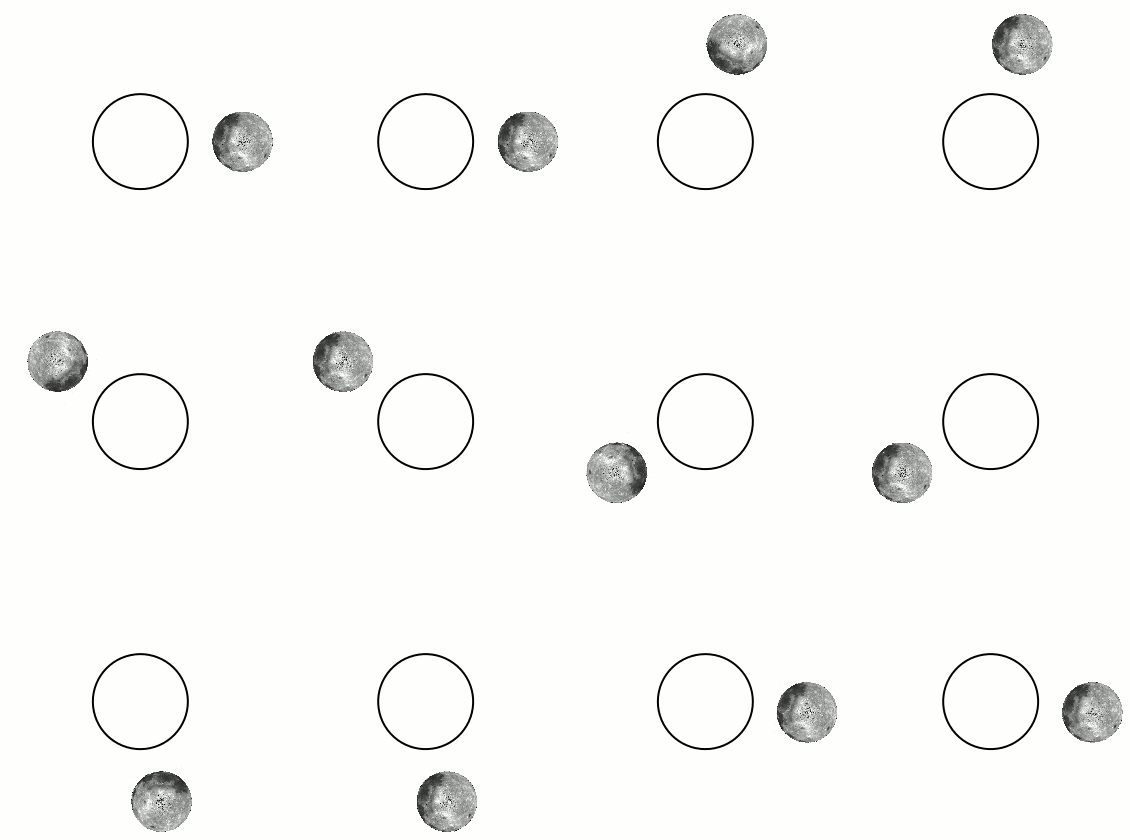
a large moon will lock faster than a smaller moon at the same orbital distance from the planet because moon mass grows as the cube of the moon radius . A possible example of this is in the Saturn system, where Hyperion is not tidally locked, whereas the larger Iapetus, which orbits at a greater distance, is.
Tidal locking - Wikipedia

Geir
Emperor Mongoose
You'd think so, but the diameter of the smaller world matters. The bigger it is, the more the differential between the 'near' and 'far' side, so it actually has a greater tidal force applied to it. All other things being equal.@Geir Quick question, I was wondering about the +DM for Size in the Tidal Lock DMs section. A +DM would mean that bigger planets are more likely to be locked to their star, but shouldn't it be the other way round? Smaller planets are more likely to be tidally locked than Gas Giants.
Interesting, you never stop learningYou'd think so, but the diameter of the smaller world matters. The bigger it is, the more the differential between the 'near' and 'far' side, so it actually has a greater tidal force applied to it. All other things being equal.

That said, I have two more questions about the DMs. Do I always subtract the DM-2 for atmospheric pressure above 2.5 bar for gas giants? I don't calculate it for gas giants, but I would have assumed that the pressure for gas giants is always above that, right?
And my other question would be, which size code should I use for gas giants? In the section about determining the size of gas giants, it says that they always have size code G + the designation of whether they are small, medium, or large. According to the eHex conversion, G would correspond to 16, is that correct?
Geir
Emperor Mongoose
I want to make sure I'm answering the right question. The 'DMs for all cases' assumes the DMs for body that you're checking to see if it is tidally locked. So if you're checking to see if the a gas giant is tidally locked, then yes. But... I'd never bother to check to see if a gas giant is tidally locked, because I don't think it means anything. I mean, the solid core of the gas giant might be locked, but what we generally consider the 'surface' of a gas giant is the atmosphere, and I assume the atmosphere would be mostly affected by heat of the star if the gas giant was close enough to be locked. Maybe not if a gas giant was a moon of another gas giant, though. Still, for something that I can't reach the surface of, I wouldn't bother to check, and the rules haven't really been tested against a locked gas giant scenario. Maybe a lack of imagination on my part.Interesting, you never stop learning
That said, I have two more questions about the DMs. Do I always subtract the DM-2 for atmospheric pressure above 2.5 bar for gas giants? I don't calculate it for gas giants, but I would have assumed that the pressure for gas giants is always above that, right?
And my other question would be, which size code should I use for gas giants? In the section about determining the size of gas giants, it says that they always have size code G + the designation of whether they are small, medium, or large. According to the eHex conversion, G would correspond to 16, is that correct?
As far as size for gas giants, the Gas Giant Sizing table on p.55 gives the size of gas giants in Terra-sized units, so multiply that value by 8 to determine Traveller scale Size. (The hopefully soon coming update will use 2D6+10 for large gas giants to give an answer of 12-22⊕ , though). For instance Jupiter (at 317 Earth masses) would count as a Medium gas giant with 11 times the diameter of the Earth and so would be GMB (with B=11, but = Size 88 in normal planet Size)
We *may* have some data on hot jupiters and tidal locking, but I'd think it's still subject to a whole lot of educated guessing. In any case, the temperature differential between sunside and nightside is going to be doing a whole lot of chaos in a deep atmosphere or hydrosphere.
As Geir says, it really won't matter when you're talking about a big ball of gas, or even a planet like Venus. That comes down more to "how hard are the extreme winds blowing my ship around in the upper atmosphere?" and "has my hull melted yet?"
There is a middle ground for solid planets whose surface you can land on, though. But those are covered.
As Geir says, it really won't matter when you're talking about a big ball of gas, or even a planet like Venus. That comes down more to "how hard are the extreme winds blowing my ship around in the upper atmosphere?" and "has my hull melted yet?"
There is a middle ground for solid planets whose surface you can land on, though. But those are covered.
Okay that makes sense. But if you go strictly by the rules, I couldn't find any indication that you don't have to check for gas giants. Perhaps a clearer instruction could be included in a second edition.I want to make sure I'm answering the right question. The 'DMs for all cases' assumes the DMs for body that you're checking to see if it is tidally locked. So if you're checking to see if the a gas giant is tidally locked, then yes. But... I'd never bother to check to see if a gas giant is tidally locked, because I don't think it means anything. I mean, the solid core of the gas giant might be locked, but what we generally consider the 'surface' of a gas giant is the atmosphere, and I assume the atmosphere would be mostly affected by heat of the star if the gas giant was close enough to be locked. Maybe not if a gas giant was a moon of another gas giant, though. Still, for something that I can't reach the surface of, I wouldn't bother to check, and the rules haven't really been tested against a locked gas giant scenario. Maybe a lack of imagination on my part.
As far as size for gas giants, the Gas Giant Sizing table on p.55 gives the size of gas giants in Terra-sized units, so multiply that value by 8 to determine Traveller scale Size. (The hopefully soon coming update will use 2D6+10 for large gas giants to give an answer of 12-22⊕ , though). For instance Jupiter (at 317 Earth masses) would count as a Medium gas giant with 11 times the diameter of the Earth and so would be GMB (with B=11, but = Size 88 in normal planet Size)
True tidal locking may also be avoided because of other bodies in the system and orbital eccentricity. Mercury is not tidal locked (as was originally thought) but in a 3:2 resonance for those reasons.
A big moon or twin planet may result in either body being locked to the other, but they may avoid being tidal locked to a primary as a result (i.e. they spin around their baycentre happily while zipping around the star in close orbit).
A big moon or twin planet may result in either body being locked to the other, but they may avoid being tidal locked to a primary as a result (i.e. they spin around their baycentre happily while zipping around the star in close orbit).

CordwainerFish
Emperor Mongoose
Trivia: Larry Niven's first fiction sale was set on Mercury, and its plot relied on Mercury being tide locked. After it was bought but before it saw print, Mercury's 3:2 resonance was discovered. He wrote Frederik Pohl, the editor who'd bought it, if he wanted the money back; Pohl wrote back saying (roughly) "You nuts? Never offer an editor their money back!"Mercury is not tidal locked (as was originally thought) but in a 3:2 resonance for those reasons.
@Geir Do I determine tidal effects only for planets and moons that have some form of surface liquid, or generally for every world (except gas giants)? Logically, I would say only for worlds that have some form of surface liquid, but then the question would be: where is the limit? Hygrographic code 1? However, I don't see any restriction to worlds with surface liquid in the rules.

Terry Mixon
Emperor Mongoose
There are tidal effects on the moons of Jupiter, even without surface liquid (or ice covered oceans). It causes lot of flexing and heating.@Geir Do I determine tidal effects only for planets and moons that have some form of surface liquid, or generally for every world (except gas giants)? Logically, I would say only for worlds that have some form of surface liquid, but then the question would be: where is the limit? Hygrographic code 1? However, I don't see any restriction to worlds with surface liquid in the rules.
Geir
Emperor Mongoose
What Terry said... Yes, it's the energy that causes heating, so the hydrosphere is irrelevant as a cause, though the resultant liquid high and low tides are an effect.@Geir Do I determine tidal effects only for planets and moons that have some form of surface liquid, or generally for every world (except gas giants)? Logically, I would say only for worlds that have some form of surface liquid, but then the question would be: where is the limit? Hygrographic code 1? However, I don't see any restriction to worlds with surface liquid in the rules.
The example of Io is explicitly in the book and it has no liquid... well maybe some liquid magma, but that's the result of the tidal heating.
Thanks.What Terry said... Yes, it's the energy that causes heating, so the hydrosphere is irrelevant as a cause, though the resultant liquid high and low tides are an effect.
The example of Io is explicitly in the book and it has no liquid... well maybe some liquid magma, but that's the result of the tidal heating.
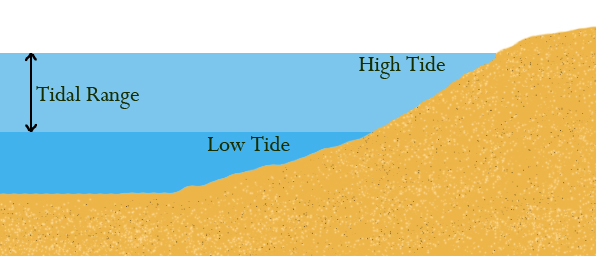
It was clear to me that the tidal heating process on page 126 applies to all terrestrial worlds. My question was more about the surface tidal effects (star tidal effect, planet tidal effect, etc.) on pages 107 and 108. This is because the results given here indicate the tidal height in meters, which only makes sense to me if you have large amounts of liquid (or if you view this value as a theoretical value for worlds without water).
Geir
Emperor Mongoose
Ah. The magnitude in meters of flux is for water, since that's what you would notice on shorelines.Thanks.
It was clear to me that the tidal heating process on page 126 applies to all terrestrial worlds. My question was more about the surface tidal effects (star tidal effect, planet tidal effect, etc.) on pages 107 and 108. This is because the results given here indicate the tidal height in meters, which only makes sense to me if you have large amounts of liquid (or if you view this value as a theoretical value for worlds without water).
The ground flexes too, but it depends on the strength and flexibility of the material (I suppose ammonia sea flux could be different than water sea flux as well, but not going down that rabbit hole). So for solids, yes they flex, but since you're standing on it and it's not in relation to anything else (except maybe a grav platform???... but more rabbits) it's not as important in most cases. And would differ based on composition.
Okay, but how do I determine whether a planet has enough liquid to be considered for these calculations? Should I use the percentage of liquid or just the hydrographics code?Ah. The magnitude in meters of flux is for water, since that's what you would notice on shorelines.
The ground flexes too, but it depends on the strength and flexibility of the material (I suppose ammonia sea flux could be different than water sea flux as well, but not going down that rabbit hole). So for solids, yes they flex, but since you're standing on it and it's not in relation to anything else (except maybe a grav platform???... but more rabbits) it's not as important in most cases. And would differ based on composition.
Geir
Emperor Mongoose
Depends. From my brief look at it, the basin size of the body of water and any resonance relationship with tidal force periodicity would have the biggest effect on amplitude. A pond has no tide; a lake, probably minuscule; an ocean, yeah, sure. So it's more the size and shape (and depth/shelf/whatever profile). Probably need a supercomputer to model it, but I'm sure it world be a good master-degree level project for someone.Okay, but how do I determine whether a planet has enough liquid to be considered for these calculations? Should I use the percentage of liquid or just the hydrographics code?
The tidal calculations in the WBH serve two purposes: 1) a temperature modification for extreme effects, which because you're dealing with quad roots, matter more on otherwise colder outer system worlds, and 2) relative amplitude compared to Earth, to use for flavor and to determine if coastal settlements are a really bad idea.
All right, thank you very much. I think I'll just calculate the tidal forces for worlds starting at Hydro Code 1, which should be quick and easy using my Excel spreadsheet.Depends. From my brief look at it, the basin size of the body of water and any resonance relationship with tidal force periodicity would have the biggest effect on amplitude. A pond has no tide; a lake, probably minuscule; an ocean, yeah, sure. So it's more the size and shape (and depth/shelf/whatever profile). Probably need a supercomputer to model it, but I'm sure it world be a good master-degree level project for someone.
The tidal calculations in the WBH serve two purposes: 1) a temperature modification for extreme effects, which because you're dealing with quad roots, matter more on otherwise colder outer system worlds, and 2) relative amplitude compared to Earth, to use for flavor and to determine if coastal settlements are a really bad idea.

Anstett
Emperor Mongoose
A very small rabbit hole peek:

 www.newscientist.com
What is the smallest body of water in which tides can be detected?
From a thimbleful of water to a massive tank and an entire sea – would these still be influenced by the pull of gravity from the moon and sun?
Anstett
Emperor Mongoose
With an article with all the definitions needed:
 en.wikipedia.org


