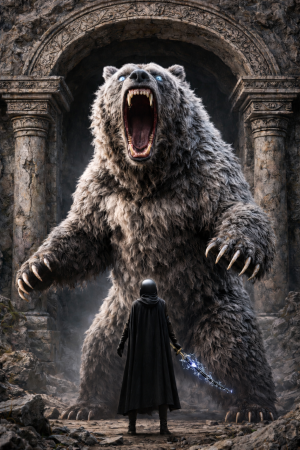
Animals as monsters are somewhat more difficult to turn into major dangers in Traveller, since not being killed is often just a question of having the right gear, and animals evolve to do things in their ecosystem, which generally does not involve being optimized to crunch through combat armour. Generally.
Animals have definite behaviour patterns that it is advantageous for travellers to know about, and savy travellers will look stuff up and use that information to their advantage. I let them do this, by designing encounters that let them get advanatages from being clever and prepared, but dangerous moments still arise. If the PCs check up in advance on dangerous local animals, such information is often freely available - to stop offworlders being eaten, which tend to dampen the tourist trade. If isn't published as public safety information, maybe with an investigate roll they can find out. If they don't check up, or if it is an unexplored world, (as I am running DNR), I'll tell them on and Animals EDU roll, or Survival, or Science Biology or similar to guess some aspects of the animal's characteristics and behaviour - which might tell them how to kill it, or scare it off, or avoid it etc.
One way would be to give some small hints in advance about the bear, via skills or tourist safety brochures or 'Great White Whale" type rumours, but keep it general and in the background, just to raise apprehension. During the adventure, they see tracks, or scat, or maybe evidence of a kill - old because the bear will need to be hungry when they finally see it. Or maybe protecting its cubs but a winter scenario is better since a snowstorm would also be a useful backdrop to an encounter.
Maybe do some recon rolls, hinting they are being stalked. A glimpse of a large shadow in the distance, through the snowstorm, or a flash bear outline on a malfunctioning PRISM googles, as the battery dies.
Advanced sensors for building suspense is a problem here, since you'll want the PCs to detect the bear at the appropriate times and not other times. But a snowstorm with high winds can reduce visibility to single digit meters. If animals on this planet often see into the IR, it might make a better backdrop, since it means the bear will be aware of IR vision - its behaviour and physiology will reflect the need to stalk prey that can see its body heat.
Cold in the -40 or lower range might also disable equipment not designed for this, which can help set up the encounter. An ideal moment for them to stumble on the bear is when the cold front hits, disabling some of their gear, then followed by a snowstorm.
FYI: A charging polar bear can move about 50-60 kph, which is about 15 meters per second, or 90 meters per combat turn. Takes nerves of steel tho stand and shoot in that situation, but you can't run away, except maybe if you have a slower runner along with you.
That bear in the picture looks about twice the height of a polar bear, cube square law suggests it might mass around 3000-6000 kgs. What this means in terms of speed is anyone's guess, as it is going to be a very different creature internally, but probably it moves even faster.
In polar bear regions, it is common to use 30.06 rifles to defend against polar bears; they are far preferred to handguns because you will likely need to hit multiple times, so you need to start shooting at 100s of meters range. I know because my wife had to qualify to use one to go sample collecting on Svalbard. Shotgun slugs would not do the trick since you don't get to shoot enough times. However, in areas where there is more vegetation than Svalbard, you might not get to see the bear that far away anyways, so maybe a shotgun slug is better in that situation.
According the instructions given my wife, most of the time, if you shoot in the air the polar bear will decide not to attack. Most of the time. You're not allowed to kill them unless they are threatening your life, so you are supposed to shoot once over its head. You are also required not to shoot in the direction of town. In case the bear is coming from that direction at you just hope the bear decides that you don't smell tasty. These days with the sea ice receding, they often get very hungry in summer since it is harder to catch seals, so they aren't as picky about what - or whom - they eat. Tourists and visiting researchers might make a good alternative meal.