
FrunkQ
Mongoose
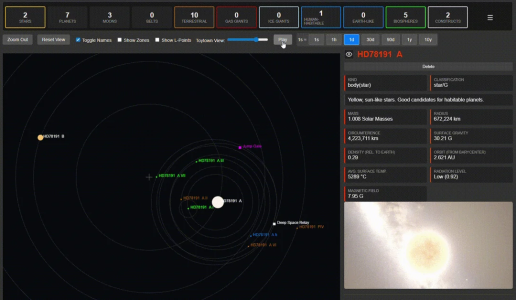
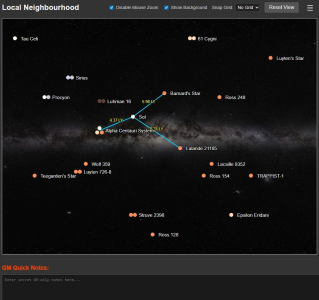
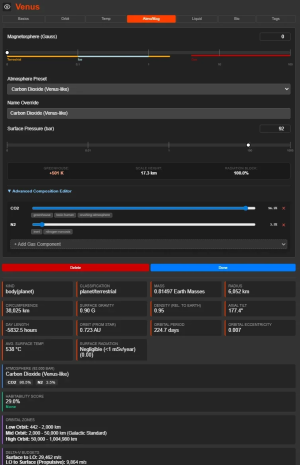
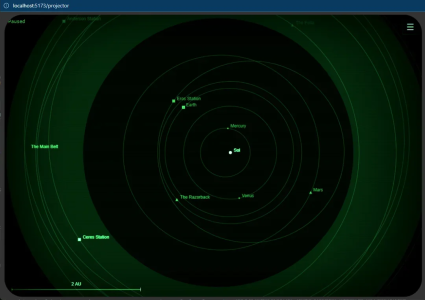
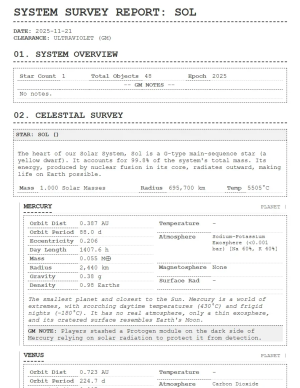
Hey all — For a few months as a hobby project, I’ve been building a browser-based star system generator & astrodynamics simulator, and I’d love feedback from people who care about how space actually works. It is primarily designed for any space based RPG. I have quite a few folk in my small user community using it for Traveller and their feedback has driven a few Traveller focussed updates:
- UWP parsing
- Generation from UWP (basic and extended ones)
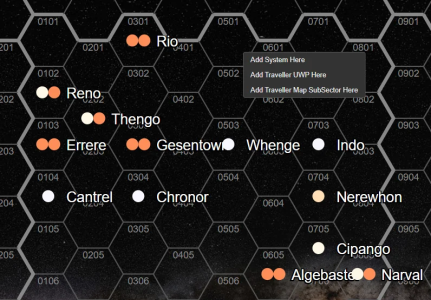
- Import Subsectors from Traveller Map (give it a second when you first use this feature as it has to grab a list of sectors from TM)
- Shows the various drive zones for Traveller ships
- Has Traveller atmospheres and sensor ranges
It does use similar principals to World Builder's Handbook but as I have a super-sized calculator at my disposal (your browser) I can do the real maths on the real physics. So this is meant to work up planetary properties from basic data.
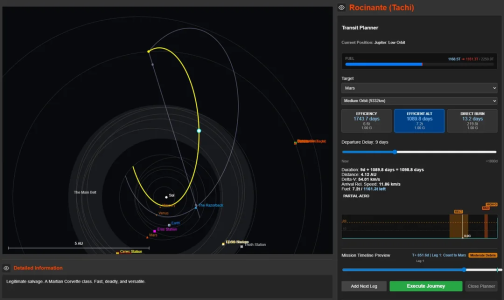
On that note - the transit physics is not "Traveller" focussed - it is all thrust/ISP/fuel and mass related - that does not directly translate to the abstracted Traveller system but you can ignore the actual physics by using direct transfer with a "magic engine" (you can define them) and use the Traveller drive zones to restrict when it is used. Here is a map from one of my users showing how they use it for Traveller:
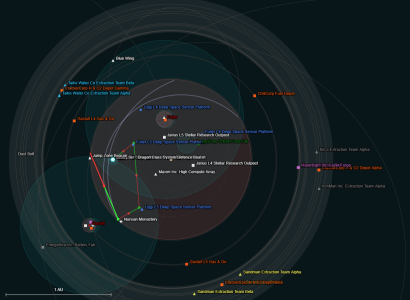
He fully fleshed out the Uggi system which he has uploaded to the Discord for other folks to play with.
Rather than me list out a bunch of abstract features of Star System Explorer it is actually better to hear how it can be used in a session.
Briefly, it shows:
The ship has sensor ranges on it - letting the GM unhide objects on the player view as they come in range.
It is still very much "work in progress" - I plan on giving the generation system a major overhaul to work from first principals (gas + dust + X billion years). Next major feature is adding a proper universal time system - allowing scheduling of transits.
Hope you find it useful. The forum does not let me post links - I will try to add a couple in the thread if it is established
- UWP parsing
- Generation from UWP (basic and extended ones)
- Import Subsectors from Traveller Map (give it a second when you first use this feature as it has to grab a list of sectors from TM)
- Shows the various drive zones for Traveller ships
- Has Traveller atmospheres and sensor ranges
It does use similar principals to World Builder's Handbook but as I have a super-sized calculator at my disposal (your browser) I can do the real maths on the real physics. So this is meant to work up planetary properties from basic data.
On that note - the transit physics is not "Traveller" focussed - it is all thrust/ISP/fuel and mass related - that does not directly translate to the abstracted Traveller system but you can ignore the actual physics by using direct transfer with a "magic engine" (you can define them) and use the Traveller drive zones to restrict when it is used. Here is a map from one of my users showing how they use it for Traveller:
He fully fleshed out the Uggi system which he has uploaded to the Discord for other folks to play with.
Rather than me list out a bunch of abstract features of Star System Explorer it is actually better to hear how it can be used in a session.
Briefly, it shows:
- The interior of the Uggi System, inside the Dust Belt where most of the action takes place.
- The various jump shadows of major bodies in red, the largest of which is Uggi A, at the center. Travellers avoid jumping in and out of jump shadows, as there's a chance of a mishap.
- The various M-drive zones of major bodies in green, within which M-drives work to push against gravity. The M-drive zone from Uggi A covers the entire picture.
- A couple dozen obvious locations for them to travel to, with more becoming visible as you zoom in to certain areas of the map.
- All four legs of the route the party took, with the acceleration phase as a light green line segment and the deceleration phase as a red segment. Off to the right, and not in the picture, is the synopsis of each leg and the time each leg took. Note that the actual target location of each leg is slightly ahead of where the target object currently is to account for its orbital movement during transit. Totally cool.
The ship has sensor ranges on it - letting the GM unhide objects on the player view as they come in range.
It is still very much "work in progress" - I plan on giving the generation system a major overhaul to work from first principals (gas + dust + X billion years). Next major feature is adding a proper universal time system - allowing scheduling of transits.
Hope you find it useful. The forum does not let me post links - I will try to add a couple in the thread if it is established
Last edited:
 )
)