How to make Traveller more popular with TTRPG players

"by far the most common reason for rejection of Traveller being able to run their bespoke setting idea or media rip off is that Traveller only does the Third Imperium." - not only reason, I posted them a while ago in another post.

I have posted previously the other common statements, but I am specifically referring to why they dismiss Traveller as a suitable game for themselves... in addition to the three you added, two of which I previously mentioned, the other common reason for rejection is random character generation
 
Actually what I commonly see, in many different social media outlets, is that pretty quickly people come along slinging the usual hackneyed anti-Traveller tropes...

"You'll die in character generation!"

"Get ready to play an aging boomer, because this is a game system that only generates retired characters!"

"The computers are the size of rooms! Like in the 1950s!"
Then you have a golden opportunity to educate them about Traveller. Correcting these misconceptions becomes second nature after a few times.

I mean Hell, that room-sized computer canard has been around since the early 80's and been debunked since then as well. Dying during character creation is such an overdone complaint that there were official T-shirts sold by Marc Miller with, "I Died During Character Generation" emblazoned on the front (I'm actually wearing one now).
 
They are both about as true as complaining about THAC0 and 1st lvl wizards only being able to cast one spell a day is for D&D.

It was true but then they added cantrips to first edition and I had my spell casters use them. In many cases the hide cantrip was as good as invisibility. A spice cantrip making garlic as an anti vampire element.

Later of course 2nd edition added specialist wizards who got more spells and the cantrip spell which let you do minor effects for an hour/level.
 
pretty quickly people come along slinging the usual hackneyed anti-Traveller tropes...

"You'll die in character generation!"

"Get ready to play an aging boomer, because this is a game system that only generates retired characters!"

"The computers are the size of rooms! Like in the 1950s!"

They get so much pleasure out of moaning the same old things. It's like a ritual.
 
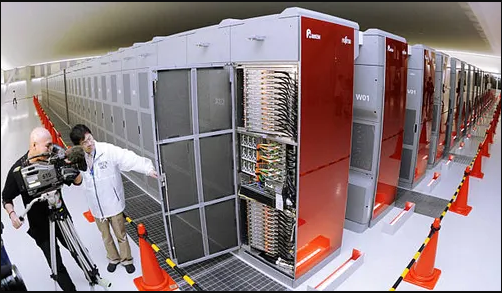
room-sized computer canard

As if a computer that could calculate faster than light flightpaths wouldn't be the size of a room. As if the computers that do the avionics, the sensors, the comms, the security systems, the reactor-jump drive-maneuver drive diagnostics, the weapons systems, and everything else wouldn't be the size of rooms. As if current supercomputers aren't the size of rooms. As if server rooms that only handle internet traffic aren't the size of rooms. As if all of these systems wouldn't be ruggedized, hardened against radiation, and built with multiple redundancies. Starship computers are not someone's crappy windows PC running Microsoft Starship Manager.

Supercomputers:

1764623680466.png

1764623797274.png

1764623886411.png
 
As if a computer that could calculate faster than light flightpaths wouldn't be the size of a room. As if the computers that do the avionics, the sensors, the comms, the security systems, the reactor-jump drive-maneuver drive diagnostics, the weapons systems, and everything else wouldn't be the size of rooms. As if current supercomputers aren't the size of rooms. As if server rooms that only handle internet traffic aren't the size of rooms. As if all of these systems wouldn't be ruggedized, hardened against radiation, and built with multiple redundancies. Starship computers are not someone's crappy windows PC running Microsoft Starship Manager.

Supercomputers:

View attachment 6813

View attachment 6814

View attachment 6815
Well, kinda. I've always looked at it as a mapping convention. A Classic Traveller Model/1 computer takes up two squares, one for the acceleration couch and one for the computer hardware.
 
"Get ready to play an aging boomer, because this is a game system that only generates retired characters!"

This does actually matter. Most young people can't imagine what being 40 is like. It's hard for them to identify with it. Most of them don't even make characters over 30. People want to make characters in the prime of their lives, when they're free of the supervision that runs young people's lives but still filled with strength, vitality, and an adventurous spirit, and still recognizable to them as players. Middle age to them is a time of doom, of sameness, of balding, getting fat, paying bills, and never having time to do anything. A teenage player might think of his character as a mature gentleman of 25. A player still in middle school might think of his character as a wise old man of 20. Young people strike out on their own, go on adventures, and take risks. The world is new to them. Middle-aged people are done with the nonsense, and they know that adventure ain't nuthin' but trouble misspelled.

Consider older Traveller characters.

They're middle aged, they're still working, taking on dangerous thankless jobs, no family, no children, and no fixed address. Their lives are failures if you think about it. They might have some savings, a share or two in a space motorhome, and a Vargr-skin jacket, but all they really have are their badass skills they got in the military, on the merchant ships, or drifting from star system to star system picking up work. Building up a stake. Drinking a cup of Basic on the starport tarmac after leaving the women they knew the night before. It was her last cup of Basic drink mix, too. It could've kept her going for a day. Getting in a couple gladiator fights between the duty free shops and the boarding concourse, you know how it is. Or, they're really just perennial losers who can't get their lives together enough to use their badass skills to keep a job.

But, Traveller's character generation system incentivizes the creation of venerable elders and ancient worthies.

Consider:

The 10,000 hour rule (but that's debunked the pundits of conventional wisdom howl, yeah yeah, I don't care and I refuse to argue). Check my math:
8 hours a day x 20 days a month x 12 months per year = 1920 hours on the job per year, with 10 days a month for days off, days not at work, days when work was meaningless routine, whatever.
So, in 5 or 6 years, or two terms for 8 years, a character will reach 10,000 hours of working at his job, be it an infantry soldier, a starship pilot, a mechanic or electronics tech, etc. He's going to be damn good at his primary job, unless Traveller posits that a lot of the time he spends at work is meaningless and that it takes 16 to 20 years to get really good at anything. Something I always found frustrating about Traveller's character generation system is that it was exceedingly difficult, almost impossible, to make an elite soldier who's both an excellent rifleman and an unarmed combat expert, who is also a capable field medic, and who speaks another language. This is not particularly unusual, but it's very difficult to create such a character in Traveller. It's very difficult to make that 26 year old space marine commando who's tough, strong, and skilled. It's like your character is a space pilot but he gets pulled off the flightline and told to do admin work for 4 years. He doesn't fire his weapon, he doesn't get any flight hours, he doesn't do the job he was trained for. Or a drifter mining asteroids who ends up spending four years getting Grav Vehicle 1.


"in Traveller you start off as a bright-eyed 18 year old with the whole universe at your feet." But then you go work a job for 20 years and then you're getting ready for retirement, Bewmer!

This so needs to be relooked.

There's point buy, but that's in another book, and having that in a separate book, that needs to be relooked.

Perhaps adjusting the character generation system so that 1 term creates a serviceable character with a solid foundation of skills, 2 terms creates a solid character who is competent enough to be a respected professional (like someone with 8 years of experience as an electrician, a maritime diesel mechanic, an airline pilot, etc.), and 3 terms creates a multiskilled highly capable character, and let 4 terms or more create the ancient masters. Focus the character generation system on people achieving peak performance between the ages of 25 and 35 rather than skill increasing with decrepitude. Make the years spent in a character's career mean something, because right now they seem like he's spent years doing routine work where he doesn't learn much. Of course that's realistic, but we don't need that in our science fiction adventures in the far future. Let's leave it behind in the 21st century along with crap school systems and debt bearing currency notes.

 
Last edited:
The age thing is pretty important. I can remember as a teenager feeling ripped off that by the time the 21st century arrived I'd be too old to enjoy it... at 34. So unfair.

You can play younger characters, but there's not much incentive to do so. Other skill based RPGs get players used to lots of skills with lots of numbers; coming to the sparser "even one level of skill is pretty good" zone that is Traveller is a bit jarring.

I don't know what can be done about that. It's largely a matter of perception than any fault of the game system; you could increase the accumulation of skills, or move to a points system, but you also don't really want characters to be too well rounded either. Or in Mary Sue territory.
 
This does actually matter. Most young people can't imagine what being 40 is like. It's hard for them to identify with it. Most of them don't even make characters over 30. People want to make characters in the prime of their lives, when they're free of the supervision that runs young people's lives but still filled with strength, vitality, and an adventurous spirit, and still recognizable to them as players. Middle age to them is a time of doom, of sameness, of balding, getting fat, paying bills, and never having time to do anything. A teenage player might think of his character as a mature gentleman of 25. A player still in middle school might think of his character as a wise old man of 20. Young people strike out on their own, go on adventures, and take risks. The world is new to them. Middle-aged people are done with the nonsense, and they know that adventure ain't nuthin' but trouble misspelled.

Consider older Traveller characters.

They're middle aged, they're still working, taking on dangerous thankless jobs, no family, no children, and no fixed address. Their lives are failures if you think about it. They might have some savings, a share or two in a space motorhome, and a Vargr-skin jacket, but all they really have are their badass skills they got in the military, on the merchant ships, or drifting from star system to star system picking up work. Building up a stake. Drinking a cup of Basic on the starport tarmac after leaving the women they knew the night before. It was her last cup of Basic drink mix, too. It could've kept her going for a day. Getting in a couple gladiator fights between the duty free shops and the boarding concourse, you know how it is. Or, they're really just perennial losers who can't get their lives together enough to use their badass skills to keep a job.

But, Traveller's character generation system incentivizes the creation of venerable elders and ancient worthies.

Consider:

The 10,000 hour rule (but that's debunked the pundits of conventional wisdom howl, yeah yeah, I don't care and I refuse to argue). Check my math:
8 hours a day x 20 days a month x 12 months per year = 1920 hours on the job per year, with 10 days a month for days off, days not at work, days when work was meaningless routine, whatever.
So, in 5 or 6 years, or two terms for 8 years, a character will reach 10,000 hours of working at his job, be it an infantry soldier, a starship pilot, a mechanic or electronics tech, etc. He's going to be damn good at his primary job, unless Traveller posits that a lot of the time he spends at work is meaningless and that it takes 16 to 20 years to get really good at anything. Something I always found frustrating about Traveller's character generation system is that it was exceedingly difficult, almost impossible, to make an elite soldier who's both an excellent rifleman and an unarmed combat expert, who is also a capable field medic, and who speaks another language. This is not particularly unusual, but it's very difficult to create such a character in Traveller. It's very difficult to make that 26 year old space marine commando who's tough, strong, and skilled. It's like your character is a space pilot but he gets pulled off the flightline and told to do admin work for 4 years. He doesn't fire his weapon, he doesn't get any flight hours, he doesn't do the job he was trained for. Or a drifter mining asteroids who ends up spending four years getting Grav Vehicle 1.


"in Traveller you start off as a bright-eyed 18 year old with the whole universe at your feet." But then you go work a job for 20 years and then you're getting ready for retirement, Bewmer!

This so needs to be relooked.

There's point buy, but that's in another book, and having that in a separate book, that needs to be relooked.

Perhaps adjusting the character generation system so that 1 term creates a serviceable character with a solid foundation of skills, 2 terms creates a solid character who is competent enough to be a respected professional (like someone with 8 years of experience as an electrician, a maritime diesel mechanic, an airline pilot, etc.), and 3 terms creates a multiskilled highly capable character, and let 4 terms or more create the ancient masters. Focus the character generation system on people achieving peak performance between the ages of 25 and 35 rather than skill increasing with decrepitude. Make the years spent in a character's career mean something, because right now they seem like he's spent years doing routine work where he doesn't learn much. Of course that's realistic, but we don't need that in our science fiction adventures in the far future. Let's leave it behind in the 21st century along with crap school systems and debt bearing currency notes.
I think, within a 2D6 system, that by term 2, so 4 years of collage and 4 of career or 8 of career, you should reasonably expect to have a professional skill at level 2, several competent skills at 1 and at least a half dozen familiar skills. The character gen system does this now.
On top of that you should probably get some number of additional skill levels for languages and hobbies, or just put into areas you may be short on, maybe INT+EDU DMs worth with a min of 1. Let them be added to existing skills if you want, with a cap of level 2 or 3. Crew skill packages sort of do this now but with a really restricted list and the number of skills you get is based on the party size.
Throw in a couple of pure player choice skills from the connections rules.
That's a 2 term character that to a non-Traveller player looks pretty weak but because of the limited number skills and the fact that even small values of DM make big differences because the range is so small and hopefully the players will start to see that it's pretty good.
Moving the point buy rules into the main book is a good idea. Giving the GMs ideas and rules to buff "low level" characters would help too. And for GMs and players that want a more "heroic" game, give them some tools and ideas, like a template character with certain base skills and a pool of points, representing the power level of the game rather than age of the character, to spend on improving the stats and skills they want.
I like the random character generation rules, but sometimes I do wish to play something a little different than a 6 term old guy already making aging rolls that I've had a hand in designing and really customizing.
Just some thoughts.
 
"even one level of skill is pretty good"

Maybe it could be handled with some expectations management, like what the skill levels actually represent as professional competence. So, when a character has a skill at 0 or 1 people have a better idea of what that means.
 
Potentially there could be an active game mechanic that gives younger players a game resource that degrades as they get older. Psionic testing already has that, but it's awkward and really just something you want to happen when young.

Maybe a pool of Boons? Beginner's luck.

Everyone gets three Luck points that they can use as a nominated Boon during a a session. But the catch is that the pool reduces by one for every completed term.

Or, if you don't like the luck angle, call it "vigour of youth" or something to represent how older characters settle into their ways and are just so damn tired.

It could be framed as some kind of psychology system, with different advantages and disadvantages for the young and the old. Dunno... just spitballing here. The point being to give REASONS to stop at two terms. I don't really want to return to Classic's forced end of character generation, or fear of character death... but Mongoose has gotten rid of those, without replacing them with any reason to wind up prior career early.
 
Last edited:
This does actually matter. Most young people can't imagine what being 40 is like. It's hard for them to identify with it. Most of them don't even make characters over 30. People want to make characters in the prime of their lives, when they're free of the supervision that runs young people's lives but still filled with strength, vitality, and an adventurous spirit, and still recognizable to them as players. Middle age to them is a time of doom, of sameness, of balding, getting fat, paying bills, and never having time to do anything. A teenage player might think of his character as a mature gentleman of 25. A player still in middle school might think of his character as a wise old man of 20. Young people strike out on their own, go on adventures, and take risks. The world is new to them. Middle-aged people are done with the nonsense, and they know that adventure ain't nuthin' but trouble misspelled.

Consider older Traveller characters.

They're middle aged, they're still working, taking on dangerous thankless jobs, no family, no children, and no fixed address. Their lives are failures if you think about it. They might have some savings, a share or two in a space motorhome, and a Vargr-skin jacket, but all they really have are their badass skills they got in the military, on the merchant ships, or drifting from star system to star system picking up work. Building up a stake. Drinking a cup of Basic on the starport tarmac after leaving the women they knew the night before. It was her last cup of Basic drink mix, too. It could've kept her going for a day. Getting in a couple gladiator fights between the duty free shops and the boarding concourse, you know how it is. Or, they're really just perennial losers who can't get their lives together enough to use their badass skills to keep a job.

But, Traveller's character generation system incentivizes the creation of venerable elders and ancient worthies.

Consider:

The 10,000 hour rule (but that's debunked the pundits of conventional wisdom howl, yeah yeah, I don't care and I refuse to argue). Check my math:
8 hours a day x 20 days a month x 12 months per year = 1920 hours on the job per year, with 10 days a month for days off, days not at work, days when work was meaningless routine, whatever.
So, in 5 or 6 years, or two terms for 8 years, a character will reach 10,000 hours of working at his job, be it an infantry soldier, a starship pilot, a mechanic or electronics tech, etc. He's going to be damn good at his primary job, unless Traveller posits that a lot of the time he spends at work is meaningless and that it takes 16 to 20 years to get really good at anything. Something I always found frustrating about Traveller's character generation system is that it was exceedingly difficult, almost impossible, to make an elite soldier who's both an excellent rifleman and an unarmed combat expert, who is also a capable field medic, and who speaks another language. This is not particularly unusual, but it's very difficult to create such a character in Traveller. It's very difficult to make that 26 year old space marine commando who's tough, strong, and skilled. It's like your character is a space pilot but he gets pulled off the flightline and told to do admin work for 4 years. He doesn't fire his weapon, he doesn't get any flight hours, he doesn't do the job he was trained for. Or a drifter mining asteroids who ends up spending four years getting Grav Vehicle 1.


"in Traveller you start off as a bright-eyed 18 year old with the whole universe at your feet." But then you go work a job for 20 years and then you're getting ready for retirement, Bewmer!

This so needs to be relooked.

There's point buy, but that's in another book, and having that in a separate book, that needs to be relooked.

Perhaps adjusting the character generation system so that 1 term creates a serviceable character with a solid foundation of skills, 2 terms creates a solid character who is competent enough to be a respected professional (like someone with 8 years of experience as an electrician, a maritime diesel mechanic, an airline pilot, etc.), and 3 terms creates a multiskilled highly capable character, and let 4 terms or more create the ancient masters. Focus the character generation system on people achieving peak performance between the ages of 25 and 35 rather than skill increasing with decrepitude. Make the years spent in a character's career mean something, because right now they seem like he's spent years doing routine work where he doesn't learn much. Of course that's realistic, but we don't need that in our science fiction adventures in the far future. Let's leave it behind in the 21st century along with crap school systems and debt bearing currency notes.
How about adventures with characters who are all 18 with only their stats and background skills for use? There would have to be a LOT of teamwork and smart roleplaying involved. It would kinda look like the old Cybergeneration game.
 
I just told my players that you aren't really that old. Future aging meant 50 was the new 30. And that the "aging" roll was just to scare you out into adventuring instead of piling on more and more careers. IIRC, I told them to halve their character's age and add 10 to get the 21st century equivalent.

Or you could just do the 2300 rule where aging starts at 50 or something?

Or the Mindjammer rule where you just don't age unless you are a barbarian.
 
It could be framed as some kind of psychology system, with different advantages and disadvantages for the young and the old. Dunno... just spitballing here. The point being to give REASONS to stop at two terms. I don't really want to return to Classic's forced end of character generation, or fear of character death... but Mongoose has gotten rid of those, without replacing them with any reason to wind up prior career early.
The really early aging rolls starting in term 4 are suppose to be the incentive.
 
The really early aging rolls starting in term 4 are suppose to be the incentive.
They USED to be that back in the day. But the Mongoose aging system is a bit softer, and the consequences of losing a point or two of physical stats are probably less important, especially if you're coming in from a high total. A UPP of 9AB785 isn't going to be cripped by an ageing crisis early, and can likely soak off a point of Dex and two points of Con before they lose their +1 modifiers. (Obviously EVERY lost point still means something... but the cost/reward equation is weighted towards staying in)

There's also the fact that doing another term is just FUN, even if things go pear shaped (IMHO, that's when it actually gets the most fun!). New players may not realise that until they've done it a few times. Letting them roll up three or four characters and choosing one to play is a good idea - but if you have them at that stage, the problems are largely solved.
 
Back
Top