Condottiere
Emperor Mongoose
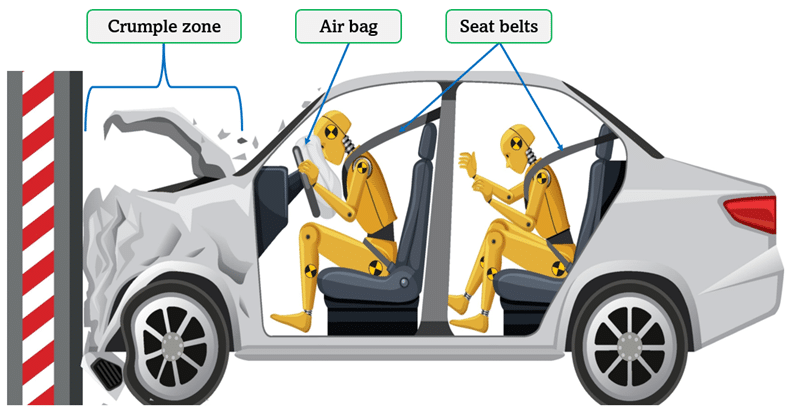
Precrumblable.


Yes, even the 50 yacht deck plan I posted shows 3 large internal areas separated by airtight bulkheads.Even if the hull breaks into sections there should be enough behind bulkheads to act as safe rooms.
Yes, even the 50 yacht deck plan I posted shows 3 large internal areas separated by airtight bulkheads.
Certainly. Undamaged areas with bulk heads don't bleed atmosphere. That certainly is a game effectNo discernible game effect.
Reinforced hull might.
also cargo compartment and rest of the ship and bridge section and rest of the ship. Fuel tanks go without sayingThere is a divider between engineering and the rest of the spacecraft, the rationale that standardized spaceships had fixed volume engineering compartments.
Though, it's also interpretation of hull, and self sealing.
I've just read it (JTAS 11). It's not exactly portable at 77Kg minimum and over 100Kg with survival kit and recovery aidsThe personal re-entry kit has been a thing since JTAS 12 in 1981...
updating to MgT baseline tech it could have a small grav unit for maneuvering instead of the chemical rocket. You can also build in an acceleration compensator and grav plate...
 .
. 
also cargo compartment and rest of the ship and bridge section and rest of the ship. Fuel tanks go without saying
I didn't state the engineering compartment wasn't separated. One doesn't prexclude the other. Common sense and engineering would dictate separating the major areas. All one has to do is look at how subs separate areas into different watertight compartments. Wouldn't be any different on a space craft. Unless the ship's architect was on drugs or plain stupid.Yes, but in CT:Book 2 there was a very explicitly stated separation of the Engineering Compartment, from the Main Compartment of the ship where "everything else" went.
I didn't state the engineering compartment wasn't separated. One doesn't prexclude the other. Common sense and engineering would dictate separating the major areas. All one has to do is look at how subs separate areas into different watertight compartments. Wouldn't be any different on a space craft. Unless the ship's architect was on drugs or plain stupid.
Yes, I remember. I've been making ships since Book 2. That is when it was in its infancy as a subject and although Marc is a very smart man he couldn't know it all and include much. It was amzing enough he got the game out the door and it started selling.Understood. I was just pointing out that Condotierre's comment was based on a design element that goes all the way back to the beginnings of CT. And that there was a particular focus in Book 2 on the separation of the Main & Engineering sections.
In 1977? At the start of both the RPG craze and the Star Wars craze?Yes, I remember. I've been making ships since Book 2. That is when it was in its infancy as a subject and although Marc is a very smart man he couldn't know it all and include much. It was amzing enough he got the game out the door and it started selling.

Don't you ever WATCH those movies? The hole isn't venting and BLOWING you out into the vacuum as the pressure drops, it is SUCKING you into space from OUTSIDE and will continue to do so until you lose your grip, or your adversary does (however long that takes) and the person finally flies thru the hole. Only then does the hurricane-force windstorm begin to drop off and let up so that whoever is left can pull themselves to safety with difficulty (regardless of the interior volume of the room, size of the hole, or how much atmosphere it could possibly have held at 1.0 atm pressure to begin with).
Even if the hull breaks into sections there should be enough behind bulkheads to act as safe rooms.

Actually there's a good half-dozen assumptions there that aren't necessarily so. Does the Imperium use Civilian contractors? Do they use a bid process or do they use a fixed cost method? What are their specification documents? How much is managed by the Navy? Ad nauseam. Honestly, your point doesn't stand as the only way or even as the best way.Your vessel was designed and constructed by the lowest bidder.


