The other reason Lab ships might look like that

rinku

Emperor Mongoose
I'm working my way through the Starship Operator's Manual, in the sensor section at the moment. And it just occurred to me that the old reason given for the Lab Ship being a torus hull, while valid, may actually be secondary.

Hull mounted sensors around a ring (possibly supplemented by sensors suspended on retractable internal spokes) should be an efficent use of tonnage to get a synthetic aperture sensor of a given diameter. Essentially the whole ship can be one giant virtual radio telescope dish.

I'd expect this comes up much more often for Lab Ships than delicate gravitic experiments.

Huh.
 
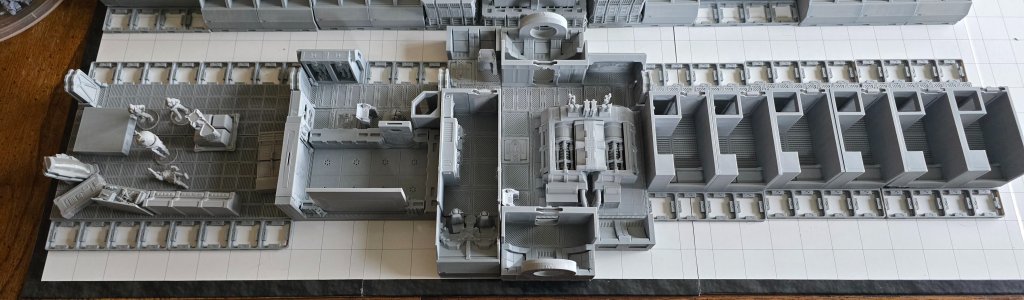
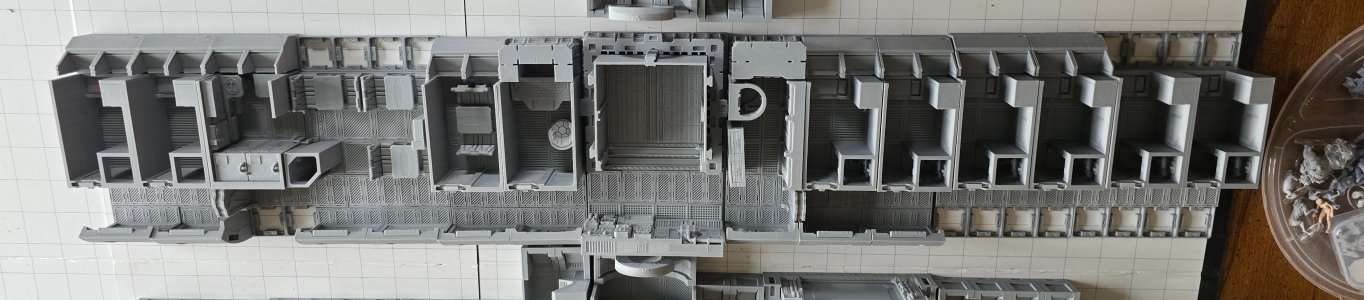
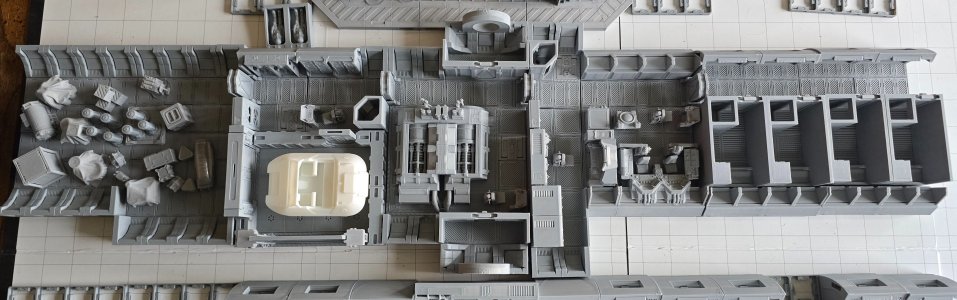
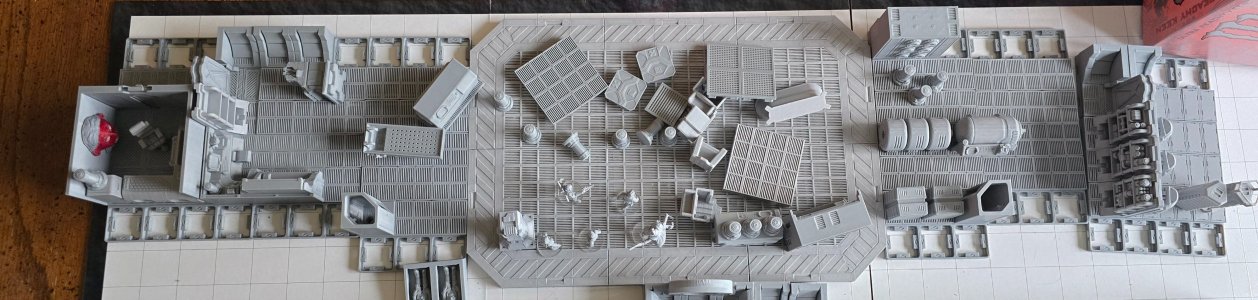
My thoughts are along the line of the original designers starting with one or the other, then realising there's two advantages to the configuration (three if you include being able to jog indefinitely through the ship...)
 
My thoughts are along the line of the original designers starting with one or the other, then realising there's two advantages to the configuration (three if you include being able to jog indefinitely through the ship...)
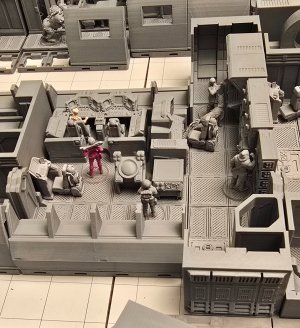
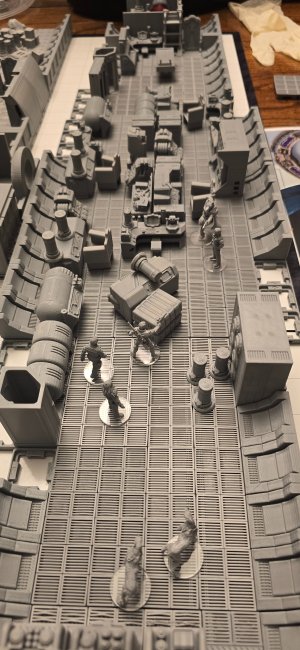
Indeed, you can run all the way around...
 

Attachments

  • 20241126_101640.jpg
    20241126_101640.jpg
    833 KB · Views: 3
  • 20241126_101939.jpg
    20241126_101939.jpg
    611.7 KB · Views: 3
  • 20241126_102359.jpg
    20241126_102359.jpg
    891.4 KB · Views: 3
  • 20241126_102617.jpg
    20241126_102617.jpg
    842.3 KB · Views: 3
  • 20241129_203951.jpg
    20241129_203951.jpg
    653.9 KB · Views: 3
  • 20241214_182827.jpg
    20241214_182827.jpg
    1.4 MB · Views: 3
Form does not follow function. The right way to do things is to start with an iconic form, and then try and think up a function to justify it. We want our cool lab ships, whether they make sense or not!

That said, getting better triangulation opportunities for sensors does make sense. Though you could manage it more cheaply with long aerials, I suppose.
 
Infinite horizon.

Or:


6e0049b3b29a5661dacacddcaa6b842d.jpg
 
I had read somewhere that in order to avoid motion sickness you'd need about 200m radius and a revolution of about 2 RPM. Anything faster than that and the inner ear/senses get disoriented too much. The ideal was much bigger, about 900m and around 1 RPM to be minimally disorienting.

That's for 1G. Obviously if you are looking for lower G's you can adjust your rotation.

I think the diameter of the Lab ship is about 60m, or a radius of 30m - which is too small to generate the necessary 1G without causing issue to crew. Google tells me that at 2RPM you could get .13G w/o too much disorientation. With about 1 day or so acclimation you could get 4RPM and about .5G. Beyond that the average person is supposed to starting having issues.

I suppose with drugs or adequate training and acclimation time your regular crew could get used to a 6RPM rotation and you'd have 1G. That makes sense for permanent crew, or else given enough time for visitors to get used to that.

I wonder though with the engines embedded port and starboard if the continual rotation would cause challenges in headings? I suppose if you cut main thrust and used attitude thrusters to make your course change and then went back to main thrust (other than your vector) it wouldn't be an issue. Might also be able to adjust port and starboard thrust to offset any wobbles. Not sure on the math portion to determine the wobble factor.
 
I backburnered the issue a couple of months ago, when I was seeing where I could cut corners in hull construction budgets.

In human terms, I felt it's more of a case of attaining the minimum gravity that has no long term health effects.

Immediate ones being nausea, which obviously you'd want to avoid.

Traveller would indicate seventy percent Terran norm, NASA forty percent.

No one probably can give a definitive answer.
 
Form does not follow function. The right way to do things is to start with an iconic form, and then try and think up a function to justify it. We want our cool lab ships, whether they make sense or not!

That said, getting better triangulation opportunities for sensors does make sense. Though you could manage it more cheaply with long aerials, I suppose.
You could do both. The aerials extend from the ring.
 
Back
Top